NAD+ Supplements: Why $100 Bottles May Be Worse than the $15 Alternative
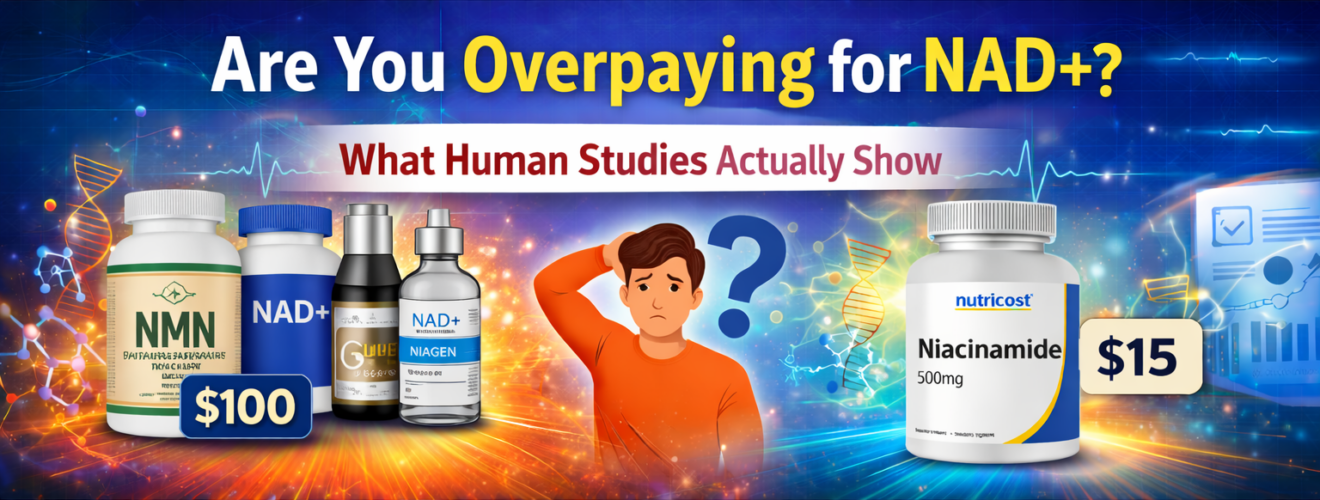
For the last few months, I’ve been seeing NAD+ supplements and rave reviews everywhere. I have been tempted to add it to my list of daily supplements. Recently, someone showed me their NAD+ supplement bottle. The front label prominently displayed “NAD+” in bold letters. Out of curiosity, I checked the ingredient list—it said nicotinamide mononucleotide, or NMN. The label wasn’t technically lying, but it wasn’t straightforward either. NMN is a precursor your body converts to NAD+, not NAD+ itself.
This is the NAD+ supplement market in a nutshell: confusing labels, premium prices, and widespread assumptions about what you’re taking. Longevity influencers claim these supplements boost energy by 300%, reverse aging, and add years to your life. The price tags match the hype—$50 to $100 per month for a single supplement. I wanted to understand what the science says.
So, I read the clinical trials. What I found surprised me. Yes, these supplements do increase blood NAD+ levels—sometimes dramatically, by 142% or more. However, when researchers looked at whether that translated into actual health benefits, the results were disappointing. One comprehensive review of 25 human trials concluded that nicotinamide riboside supplementation produced “few clinically relevant effects.” Even stranger, a 2025 study revealed that your gut bacteria convert most of that expensive NMN into plain vitamin B3. Which raises an uncomfortable question: are we paying premium prices for biology that doesn’t follow branding claims?
Why Everyone’s Talking About NAD+
NAD+ (nicotinamide adenine dinucleotide) is a coenzyme found in every cell of your body. It’s essential for converting food into energy in your mitochondria, repairing DNA, and regulating gene expression. The unfortunate reality is that NAD+ levels decline with age, though the magnitude varies by individual. This decline has been linked to age-related diseases, metabolic dysfunction, and cellular aging.
The supplement industry saw an opportunity. If declining NAD+ causes aging, then boosting NAD+ should slow it down. However, there’s a fundamental issue: you can’t just swallow NAD+ itself. The molecule is large and charged, making it unstable in the digestive tract. It is rapidly broken down in the gut before it can do anything useful.
That’s where NAD+ precursors come in—smaller molecules like nicotinamide mononucleotide (NMN) and nicotinamide riboside (NR) that your body can theoretically convert into NAD+. These are what most “NAD+” supplements contain, despite what the label says.
What Really Gets Absorbed?
I started investigating whether these supplements even work at the most basic level: do they raise NAD+ in your bloodstream?
Direct NAD+ doesn’t work for oral supplementation. The medical literature is clear: NAD+ is rapidly degraded in the gastrointestinal tract and fails to effectively absorb intact. If you see a capsule labeled “NAD+,” check the ingredient list—you’re likely getting a precursor, not actual NAD+.
Nicotinamide mononucleotide (NMN) does raise blood NAD+ levels. A pharmaceutical-grade formulation showed substantial dose-related increases when tested at 1,000mg once or twice daily for 14 days. Blood NMN concentrations increased 1.7-fold and 3.7-fold respectively, with corresponding NAD+ elevations. Multiple studies administering 250-1,000mg daily to study participants confirmed these effects.
Nicotinamide riboside (NR) is another effective ingredient for increasing blood levels. Clinical trials found that NR supplementation at doses of 100-1,000mg increased whole blood NAD+ by 22-142% within two weeks, with higher doses producing greater increases. One pilot study of a single person showed blood NAD+ increasing as much as 142% with a single 1,000mg oral dose of NR.
This means the supplements do what they’re supposed to do biochemically. Your blood tests look great. However, here’s where things get complicated.
The Gut Bacteria Plot Twist
In 2025, researchers published a study that changed how we understand NAD+ supplements. Using isotope tracing, they discovered that most orally administered NR and NMN undergoes gut microbiota-mediated conversion to nicotinic acid — a form of vitamin B3 — rather than being directly absorbed. Only a small portion makes it intact from the small intestine. The majority is converted through what’s called enterohepatic circulation—your gut bacteria break it down before it can do much else.
Even more surprising: when researchers compared different NAD+ precursors head-to-head, plain nicotinamide (another form of vitamin B3) proved most effective at boosting NAD+ in blood, followed by nicotinic acid, then NR, then NMN. The expensive stuff came in last.
NAD+ Supplements: What Human Studies Actually Show
Raising blood NAD+ sounds impressive, though does it translate to feeling better, living longer, or preventing disease? This is where the evidence is thin.
NMN trials have shown modest results at best. The strongest finding came from a study in postmenopausal women with prediabetes who were overweight or obese. After 10 weeks of 250mg daily NMN, they showed improved muscle insulin sensitivity. That’s a real finding, though notice how specific the population is. Other NMN studies found some improvements in sleep quality and walking speed in older adults. However, a meta-analysis of eight trials involving 342 middle-aged and older adults found no significant benefit of NMN on fasting glucose, fasting insulin, HbA1c, insulin resistance, or lipid profiles.
NR trials fared even worse. A comprehensive review of 25 published human NR trials concluded that oral NR supplementation has displayed few clinically relevant effects, with an “unfortunate tendency in the literature to exaggerate the importance and robustness of reported effects.” A 12-week trial in obese, insulin-resistant men using 2,000mg daily NR found no improvements in insulin sensitivity, glucose production, resting energy expenditure, or body composition.
Both NR and NMN have consistently demonstrated excellent safety profiles, with no serious adverse events reported. Yet safety without effectiveness doesn’t help much.
Why Blood Levels Don’t Predict Benefits
The fundamental problem is that raising circulating NAD+ levels doesn’t guarantee you’re restoring NAD+ levels inside cells where it matters. NAD+ exists in distinct cellular compartments—cytoplasm, mitochondria, and nucleus. Supplementation may not effectively reach the specific compartments where NAD+ depletion causes problems.
Current measurement techniques assess whole blood NAD+ without distinguishing between these functionally distinct pools. You might have high NAD+ in your blood while your mitochondria remain depleted. It’s like measuring how much fuel is in your gas tank without checking if it’s reaching the engine.
The gut microbiota issue compounds this. If most of your expensive NMN is being converted to vitamin B3 by bacteria, the assumed metabolic pathway isn’t even happening. This may explain why studies in mice showed dramatic benefits that haven’t materialized in humans—the mice have different gut bacteria and different baseline NAD+ metabolism.
Most human trials also studied relatively healthy middle-aged or older adults, not people with confirmed NAD+ deficiency. Short study durations (typically 2-12 weeks) may not provide enough time for metabolic changes to occur. And critically, no human studies have evaluated whether NAD+ supplementation extends lifespan or reverses aging—those endpoints simply haven’t been tested.
For another “cheap but evidence-backed” option, read the $15 cholesterol fix most people overlook.
The Nicotinamide Advantage
Plain nicotinamide (also called niacinamide) is a form of vitamin B3 that raises NAD+ levels through direct entry into the salvage pathway. It doesn’t require gut bacterial conversion. In head-to-head testing, it proved most effective as an NAD+ precursor for boosting blood NAD+.
The cost difference is striking. Nutricost Niacinamide (500mg, 240 capsules) costs around $15 and lasts four months at 500mg daily. Compare that to Double Wood NMN at $40 per month or Tru Niagen NR at $50 per month. You’re paying 10-15 times more for products that, according to the research, may not work any better—and in some tests are less effective than plain vitamin B3.
Nicotinamide has been studied at doses up to 3 grams daily in clinical trials. Research guidelines suggest doses under 1,500mg daily generally don’t require regular clinical monitoring. It doesn’t cause the flushing side effects associated with niacin, making it well-tolerated for most people. Common side effects are mild: occasional digestive upset or headache that resolve with dose reduction.
The caveat: nicotinamide lacks the extensive clinical trial data that NR and NMN have accumulated for specific age-related conditions. We don’t have a nicotinamide equivalent of the insulin sensitivity study in prediabetic women. Yet we also don’t have much evidence that NMN or NR deliver meaningful benefits for most people.
What About Injectable NAD+?
Some longevity sites and clinics offer NAD+ injectables or IV infusions, charging $300-1,000 per treatment. The theory is sound: bypass the gut entirely and deliver NAD+ straight to the bloodstream.
Recent research adds an interesting wrinkle. Lab studies show that NAD+ can cross cell membranes and even penetrate mitochondrial membranes—something researchers previously thought was impossible. Once inside cells, NAD+ does increase ATP production and mitochondrial function.
There’s a catch, though. The one published study of IV NAD+ infusion in humans found that NAD+ was rapidly broken down by enzymes in the bloodstream. At the infusion rate tested, NAD+ was being destroyed as fast as it was infused. Plasma NAD+ levels didn’t even increase for the first two hours.
Does this mean injectable NAD+ doesn’t work? Not necessarily. The infusion rate might have been too slow, or different formulations might perform better. Yet we have zero published clinical trials showing injectable NAD+ produces health benefits. At $300-1,000 per infusion (or approximately $250-500 per month for at-home subcutaneous injections at typical dosing) without clinical evidence, it’s the most expensive option with the least proof it works.
ZenobiaPeak Score: NAD+ Approaches
Evidence-based summary of effectiveness, cost, and real-world viability
| Compound | Score (0–100) | Estimated Annual Cost* | Notes |
|---|---|---|---|
|
Direct Oral NAD+
Capsules/tablets
|
0/100 | ~$480–600/yr |
Rapidly degraded in the GI tract; unlikely to meaningfully raise systemic NAD+ in humans. |
|
Subcutaneous / IV NAD+
Infusions/injections
|
5–10/100 | ~$3,000–6,000/yr |
Rapidly degraded in circulation; essentially no high-quality clinical outcomes trials. Experimental and expensive. |
|
Nicotinamide Riboside (NR)
Most studied branded precursor
|
10–15/100 | ~$600–2,400/yr |
Raises NAD+ biomarkers but has not consistently shown meaningful clinical benefits in healthy adults; possible inflammation effects in select contexts. |
|
Nicotinamide Mononucleotide (NMN)
Popular precursor
|
15–20/100 | ~$480/yr |
Raises NAD+ safely; clinical improvements in healthy individuals appear minimal. More plausible in older/metabolic-risk populations. |
|
Plain Nicotinamide
Niacinamide (vitamin B3)
|
20–25/100 | ~$45/yr |
Most cost-effective for raising NAD+; strong pharmacokinetics and reliable NAD+ precursor logic—without the premium pricing. |
*Assumes daily use at research-backed dosages.
Recommendations
Evidence-Based NAD+ Options (Examples)
Most “NAD+” products are precursors (niacinamide, NMN, NR). These examples are grouped by value and evidence strength.
 |
Best Value (Most Practical)
Low-cost precursor commonly used in the 500–1,000mg/day range. No flushing.
|
 |
If You Prefer NMN
Raises NAD+ biomarkers in trials; real-world outcomes are modest overall.
|
 |
NR Option
Strong biomarker increases; limited consistent outcomes in healthy adults.
|
 |
Generally Not Recommended
Direct oral NAD+ is widely considered poorly viable due to digestive breakdown.
|
 |
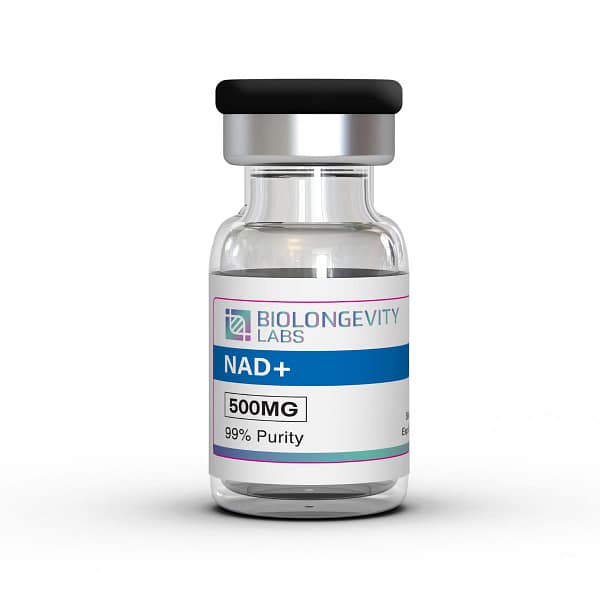
Marketing Heavy
Liposomal delivery is plausible but lacks strong human outcome data.
|
 |
Experimental
Bypasses digestion; human outcomes data is limited and costs are high—treat as experimental.
|
*Affiliate links. Always consult a qualified healthcare professional before changing supplement or medication routines.
How to evaluate NAD+ products:
Check the ingredient list, not just the front label. Products labeled “NAD+” often contain precursors like NMN or NR instead of actual NAD+. Look for specific ingredient names: “nicotinamide mononucleotide,” “nicotinamide riboside,” or “nicotinamide.” Be skeptical of claims about “reversing aging,” “boosting energy 300%,” or “adding years to your life”—no human studies — as of yet — support these outcomes. Compare cost per milligram across products and remember that the cheapest option (nicotinamide) performed best in head-to-head testing.
The Bottom Line
The research is clear but mostly unsatisfying. NAD+ precursors do raise blood NAD+ levels. However, those biochemical changes haven’t translated into the anti-aging miracles the marketing promises. For most healthy people, NAD+ supplementation can be very expensive without proven health or longevity benefits.
If you’re specifically a postmenopausal woman with prediabetes, there’s one solid study suggesting 250mg daily NMN might help insulin sensitivity. If you’re an older adult with mobility issues, NMN might modestly improve walking speed and sleep quality based on limited evidence. Beyond those narrow populations, the case is weak.
If you decide that supplementation is right for you – purchase plain nicotinamide.
References
Nicotinamide Adenine Dinucleotide Is Transported Into Mammalian Mitochondria. eLife. 2018. Davila A, Liu L, Chellappa K, et al.
Safety and Metabolism of Long-Term Administration of NIAGEN (Nicotinamide Riboside Chloride) in a Randomized, Double-Blind, Placebo-Controlled Clinical Trial of Healthy Overweight Adults. Scientific Reports. 2019. Conze D, Brenner C, Kruger CL.
MIB-626, an Oral Formulation of a Microcrystalline Unique Polymorph of Β-Nicotinamide Mononucleotide, Increases Circulating Nicotinamide Adenine Dinucleotide and Its Metabolome in Middle-Aged and Older Adults. The Journals of Gerontology. Series A, Biological Sciences and Medical Sciences. 2023. Pencina KM, Lavu S, Dos Santos M, et al.
Nicotinamide Riboside Is Uniquely and Orally Bioavailable in Mice and Humans. Nature Communications. 2016. Trammell SA, Schmidt MS, Weidemann BJ, et al.
The Acute Effect of Different NAD Precursors Included in the Combined Metabolic Activators. Free Radical Biology & Medicine. 2023. Li X, Yang H, Jin H, et al.
What Is Really Known About the Effects of Nicotinamide Riboside Supplementation in Humans. Science Advances. 2023. Damgaard MV, Treebak JT.
Nicotinamide Mononucleotide Increases Muscle Insulin Sensitivity in Prediabetic Women. Science. 2021. Yoshino M, Yoshino J, Kayser BD, et al.
Effects of Nicotinamide Mononucleotide on Glucose and Lipid Metabolism in Adults: A Systematic Review and Meta-Analysis of Randomised Controlled Trials. Current Diabetes Reports. 2024. Chen F, Zhou D, Kong AP, et al.
A Randomized Placebo-Controlled Clinical Trial of Nicotinamide Riboside in Obese Men: Safety, Insulin-Sensitivity, and Lipid-Mobilizing Effects. The American Journal of Clinical Nutrition. 2018. Dollerup OL, Christensen B, Svart M, et al.
A Pilot Study Investigating Changes in the Human Plasma and Urine NAD+ Metabolome During a 6 Hour Intravenous Infusion of NAD. Frontiers in Aging Neuroscience. 2019. Grant R, Berg J, Mestayer R, et al.
The Adverse Effects of Oral Niacin/Nicotinamide – An Overview of Reviews. Eye. 2025. Young SL, Gazzard G.
American Glaucoma Society and American Academy of Ophthalmology Position Statement on Nicotinamide Use. American Academy of Ophthalmology (2025). 2025. Guideline
Association of Human Whole Blood NAD Contents With Aging. Frontiers in Endocrinology. 2022. Yang F, Deng X, Yu Y, et al.
Age-Dependent Decline of NAD-Universal Truth or Confounded Consensus? Nutrients. 2021. Peluso A, Damgaard MV, Mori MAS, Treebak JT.
Health statements have not been evaluated by the Food and Drug Administration. Products mentioned are not intended to diagnose, treat, cure, or prevent any disease.