Choline: The Brain-Boosting Nutrient to Improve Memory (Even When You’re Sleep Deprived)

Are you looking for a mental edge – maybe a sharper memory or a way to beat that foggy feeling after a bad night’s sleep? Emerging research points to an unsung nutrient called choline that could sharpen your memory and even help a tired brain. Choline isn’t just another supplement fad; it’s an essential nutrient your brain cells need to build membranes and produce acetylcholine (the neurotransmitter crucial for memory and learning). Recent studies suggest getting enough choline can not only protect your long-term brain health, but might also help a sleep-deprived mind stay sharper. Below, we unpack what the latest science says about choline and memory (including intriguing findings on sleep deprivation) and compare the top choline supplement forms – Alpha-GPC, CDP-choline (citicoline), and phosphatidylcholine – with practical tips on using them effectively.
Choline and Cognitive Health: New Research Insights
Choline has long been touted as “brain food,” but what does current science say about its real-world impact on memory and cognitive decline? Two major lines of research are converging on a fascinating story: meeting your choline needs may protect your brain as you age, and extra choline might help a tired brain bounce back from sleep loss.
Choline Intake Linked to Lower Dementia Risk (UK Biobank Study)
One of the most comprehensive recent findings comes from a large UK Biobank cohort. In this 12-year prospective study of over 125,000 middle-aged adults, those with moderate choline intake (around 333–354 mg per day) had better brain outcomes than people who ate less choline. Specifically, moderate choline consumers had roughly a 20% lower risk of developing dementia (including Alzheimer’s disease) compared to the lowest-intake group. They also performed better on cognitive tests of attention, intelligence, and processing speed. In plain terms, getting around 300+ mg of choline each day was associated with a sharper mind and a lower chance of cognitive decline. Notably, the benefit followed a U-shaped pattern – extremely low or high choline intakes didn’t help as much as a middle-range “Goldilocks” zone – suggesting there’s a “just right” intake range for brain health. This big finding supports the idea that choline-rich foods (like eggs, fish, and soy) or supplements might be brain-protective in the long run.
Fighting Brain Fog: Choline and Sleep Deprivation
If you’ve ever pulled an all-nighter or struggled through a week of poor sleep, you know how fried your brain can feel. Intriguing new research in animals suggests choline could come to the rescue here as well. In a 2025 experiment, scientists subjected young mice to chronic sleep deprivation (the rodent equivalent of repeated late nights) and then gave some of them extra choline. The results were striking: the choline-supplemented mice largely avoided the memory and learning impairments usually caused by sleep loss. How did it work? Choline helped repair the hippocampus (the brain’s memory center) from stress caused by sleep deprivation. Treated mice showed less brain inflammation and oxidative stress, more balanced brain cell membranes, and even a restoration of normal synaptic plasticity (the brain’s ability to form new connections). In practical terms, choline made their brains more resilient: it sealed up leaky blood-brain barriers and calmed overactive immune cells in the brain (hallmarks of sleep-deprived damage). As a result, the choline-fed mice performed significantly better on memory tests despite being sleep-deprived.
While this was an animal study, it hints that choline might reduce the “brain fog” and cognitive slowdown that come from lack of sleep. Early studies in rats support this too – for example, in one experiment citicoline (CDP-choline) prevented the memory deficits normally seen after REM-sleep deprivation. Direct human trials on sleep deprivation are limited, but we do know choline is vital for optimal brain function, and many people anecdotally report feeling sharper after taking choline on a poor-sleep day. In fact, one research team concluded that choline could potentially be developed as a functional food or therapeutic to counteract cognitive impairment from sleep disturbances.
Top 3 Choline Supplements to Boost Your Brain
There are multiple forms of choline available as supplements, each with its own strengths. Below are three popular options – Alpha-GPC, CDP-choline (citicoline), and phosphatidylcholine – and how they compare. All of them can help raise choline levels, but they differ in how quickly they act, how long they last, and what extra benefits they bring.
(Note: The doses mentioned are general suggestions for adults. It’s wise to start at the lower end and see how you feel. If you have any medical conditions or take medications, consult a healthcare provider.)
- Alpha-GPC (Alpha-Glycerylphosphorylcholine) – Fast-Acting Memory Fuel
What it is: Alpha-GPC is a concentrated choline compound derived from lecithin (a fat). It’s about 40% choline and is prized for its ability to rapidly cross the blood-brain barrier. Once ingested, Alpha-GPC releases free choline that your neurons use to make acetylcholine – the neurotransmitter heavily involved in memory and muscle control. Because it’s so efficient at delivering choline into the brain, Alpha-GPC is considered a fast-acting cognitive enhancer.
Benefits and use cases: People often take Alpha-GPC for a quick mental boost: to think clearer focus before an exam, an important meeting, or even a workout. Research in animals shows Alpha-GPC can elevate acetylcholine levels in the hippocampus and improve learning, memory, and attention. Human studies have suggested it may improve cognitive symptoms in individuals with mild cognitive impairment or early Alzheimer’s. For example, an observational study in patients with mild cognitive impairment found that those who used Alpha-GPC had a lower rate of progressing to dementia, and even a reduced risk of stroke, over a few years. For healthy individuals, a small placebo-controlled trial in young adults noted enhancements in attention and reaction time shortly after taking Alpha-GPC (measured by tests like the Stroop task). Many athletes also use Alpha-GPC; some evidence links a 600 mg dose to improved power output in weight training and a temporary boost in growth hormone release. In short, Alpha-GPC can provide a noticeable on-demand mental and physical performance lift.
Dosage and bioavailability: A typical effective dose range for Alpha-GPC is 300–600 mg per day. A 300 mg starting dose (providing around 120 mg of actual choline) can benefit cognition. Alpha-GPC is highly bioavailable – it’s absorbed quickly and peaks in the bloodstream within about an hour. However, its effects are relatively short-lived. The compound’s half-life is roughly 4–6 hours, meaning you might take it 1–2 times per day for sustained coverage (for example, morning and early afternoon). Thanks to its rapid action, Alpha-GPC is a useful “on demand” option – you can take it about an hour before a mentally demanding task for sharper focus and memory.
Warnings: Alpha-GPC is generally considered safe and has received GRAS status from the U.S. FDA. Side effects are rare and mild, such as headaches or slight digestive upset. Very high doses could cause signs of excess acetylcholine (e.g., muscle twitches, restlessness, or insomnia), or in extreme cases a fishy body odor or lowered blood pressure. If you take medications that affect acetylcholine (such as certain Alzheimer’s or glaucoma drugs), consult a healthcare provider first.
- CDP-Choline (Citicoline) – Long-Lasting Brain Support
What it is: CDP-choline (citicoline) is a compound that your body naturally uses to build cell membranes and make acetylcholine. In supplement form, it’s often sold as citicoline sodium. When you take citicoline, it breaks down into two parts: choline and cytidine. The choline is used for neurotransmitters and rebuilding cell membranes, while cytidine is converted into uridine in the brain – a molecule that helps repair neurons and synapses. This dual action makes citicoline a favorite for comprehensive brain support.
Benefits and use cases: Citicoline has been widely studied for its potential in stroke recovery, memory enhancement, and attention improvement. It’s been studied in a variety of groups, from teenagers to older adults. One big advantage noted by scientists is that citicoline is exceptionally well-absorbed by the brain – it’s often cited as “the form of choline best absorbed by the brain.” For otherwise healthy individuals, citicoline can speed up cognitive processing and improve focus, especially if baseline performance is suboptimal. For example, adolescent males given citicoline showed faster task completion and improved attention in some tests, and in young adults, reaction time improved after citicoline supplementation (particularly in those who initially had slower responses). In older adults experiencing memory lapses (age-associated memory impairment), 12 weeks of citicoline led to better episodic memory and overall cognitive performance compared to placebo. These benefits tend to be more pronounced in individuals who start out with some cognitive deficits – in other words, citicoline can help when choline levels are low but may do little if they are already sufficient. Citicoline has also been used in clinical settings for stroke and brain injury recovery. It’s not a cure-all, but some trials found higher doses aided the recovery of cognitive function after stroke (results have been mixed, and citicoline isn’t a standard stroke treatment in the US). All told, citicoline is an excellent daily choice for brain health – supporting memory, focus, and the brain’s structural integrity over time.
Dosage and bioavailability: Common citicoline doses range from 250 mg to 500 mg per day. CDP Choline (Citicoline) is very bioavailable orally, and interestingly, it has a long half-life in the body. Research indicates the choline boost from citicoline has an elimination half-life on the order of 60–70 hours. This means that, unlike Alpha-GPC, citicoline’s effects are more sustained – choline from a dose of citicoline remains elevated in your system for a couple of days. (Meanwhile, the cytidine/uridine component helps build up membrane phospholipids over time.) Practically speaking, taking citicoline daily has a compounding, steadying effect on brain choline levels. You wouldn’t use citicoline as much for an immediate one-hour boost (it’s not as noticeably acute as Alpha-GPC), but it works well for consistent long-term cognitive maintenance. Some users describe citicoline’s effect as providing a gentle, sustained clarity rather than a stimulant-like kick.
Warnings: Citicoline has an excellent safety record and is as well tolerated as a placebo in studies, with no serious adverse effects. Minor side effects like headache, digestive upset, or mild insomnia are uncommon. One caution: citicoline can enhance the effects of L-DOPA and Mucuna extract supplements and drugs so individuals on such treatment should consult a doctor before proceeding . Overall, citicoline is considered safe even for long-term use at recommended dosages.
- Phosphatidylcholine (PC) – Natural Choline for Holistic Support
What it is: Phosphatidylcholine is a bit of a mouthful (we’ll call it PC), but it’s basically the form of choline found in foods like egg yolks, soybeans, and sunflower seeds. It’s a phospholipid – a fat molecule that includes choline as part of its structure – and it’s a major component of our cell membranes. As a supplement, PC usually comes from soy or sunflower lecithin. For instance, a common product is “Lecithin 1,200 mg” gelcaps, which typically provide around 420 mg of actual phosphatidylcholine per capsule (the rest of the capsule is other phospholipids and carriers). That equates to roughly 50–60 mg of pure choline yield per capsule. PC isn’t as concentrated a choline source as Alpha-GPC or citicoline, but it has its own advantages: it’s the natural form the body uses in cell membranes, and supplemental PC can integrate directly into those membranes.
Benefits and use cases: Phosphatidylcholine is often taken for overall brain wellness and liver support. In the brain, PC is a major component of neurons; by supplementing it, you may support membrane repair and nerve signaling. It’s not a stimulant and won’t provide an immediate boost, but over time it may contribute to better cognitive function. In fact, moderate dietary intake of PC (for example, from eggs) has been correlated with better cognitive performance and a lower risk of dementia in epidemiological studies. (One recent systematic review found that adults who eat eggs regularly tend to perform better on certain cognitive tests.) Some older clinical trials also explored high-dose PC in people with cognitive disorders, though results were mixed – simply eating more PC isn’t a magic bullet if neurons are already damaged. Where PC shines is in holistic benefits: it’s used therapeutically to help repair liver cells (the liver exports PC to package fats, so extra PC can aid conditions like fatty liver). Many people take PC or lecithin to support healthy cholesterol metabolism and liver detoxification processes. Additionally, PC tends to be gentler on the stomach for some individuals compared to choline salts, and it doesn’t directly cause a big acetylcholine spike. This means it’s less likely to cause any immediate side effects such as headaches or jitters.
Dosage and bioavailability: For cognitive purposes, typical doses of Phosphatidylcholine Lecithin are in the range of 1,200 – 2,400 mg of PC daily, often divided into two doses (morning / evening). Some people opt for granulated lecithin, adding a tablespoon to smoothies. The bioavailability of PC is good, but because it’s absorbed as a fat, you should take it with food (ideally with a little fat) to stimulate efficient uptake. Since it’s absorbed via the lymphatic system, PC doesn’t spike blood choline as rapidly as water-soluble forms. Instead, it provides a more prolonged, mild increase in choline levels. There isn’t a well-defined “half-life” for phosphatidylcholine’s effects, because part of it integrates into cell membranes (where it can stay and function for some time) and part is slowly metabolized. In general, once-daily dosing with PC is sufficient if your goal is nutritional support, but splitting the dose into morning and evening can maintain a steadier choline supply for your body.
Warnings: Phosphatidylcholine (lecithin) supplements are widely used and considered safe. If you have a soy allergy, opt for sunflower-derived lecithin since many PC supplements use soy. Very high doses (far above typical use) can cause digestive upset and, in extreme cases, a “fishy” body odor due to choline metabolism. Normal supplemental use of PC does not pose significant side effect concerns.
Recommendations
Choline forms, typical dosing used in the research
| Recommendation | Choline Type | Typical Daily Dose | Best Use Case |
|---|---|---|---|

Nutricost Alpha-GPC
On-Demand Focus
|
Alpha-GPC |
300mg (usually once or twice daily) | Quick cognitive boost on demand (e.g., before studying or exercise); acute enhancement of focus and mental clarity. |
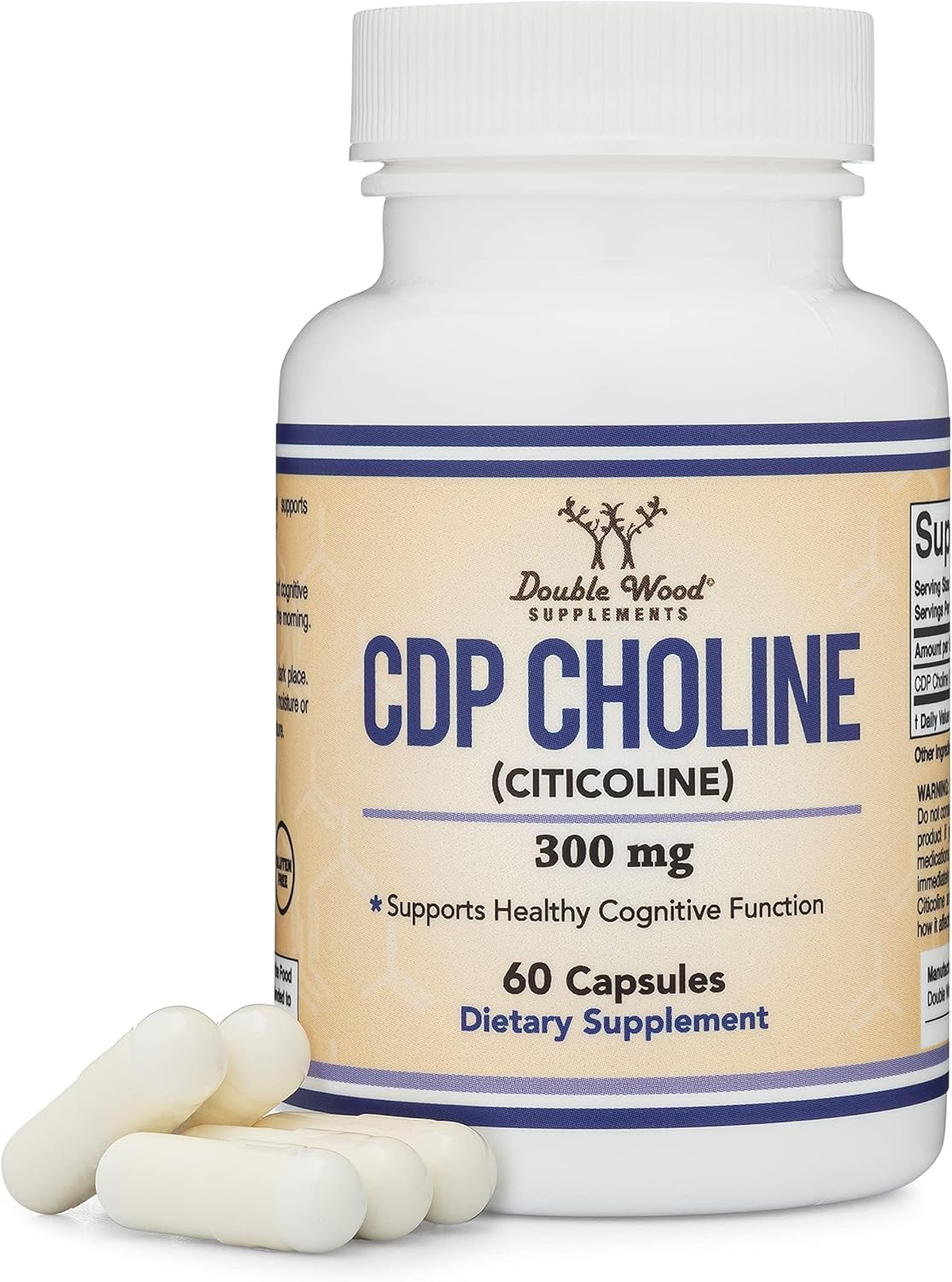
Double Wood CDP Choline
Daily Support
|
CDP-Choline (Citicoline) |
250–500mg (once daily) | Daily brain supplement for ongoing support of memory, focus, and neuroprotection; ideal for long-term cognitive health plans. |

Carlyle Sunflower Lecithin Softgels
Food-Based Option
|
Phosphatidylcholine (PC from lecithin) |
~1,200–2,400mg daily (split 1–2 doses with meals) | General wellness and “food-based” cognitive support; good for those who prefer a natural approach or want membrane/liver support alongside brain benefits. |
If you enjoyed this article, you might like, NAD+ Supplements: Why $100 Bottles May Be Worse than the $15 Alternative.
Bottom Line
Choline is proving to be an intriguing nutrient at the crossroads of nutrition and neuroscience. Whether you’re aiming to preserve your brain for the future, give yourself a mental edge in the present, or help your mind recover from stressors like sleep loss, ensuring adequate choline is a smart move. Most people can get enough choline through a balanced diet rich in eggs, meats, and beans, but many still fall short of optimal intake.
If you want quick, noticeable effects, an Alpha-GPC supplement might be your go-to for occasional on-demand brain boosts. For steady daily cognitive support, citicoline is an excellent choice with its long-lasting action and multi-faceted brain benefits. And if you prefer a natural, holistic approach, phosphatidylcholine (from lecithin) provides choline in the same form found in foods, supporting both brain and liver health over time.
No matter which route you choose, remember that choline is not a stimulant – you won’t feel a jolt of energy from it. Instead, think of choline as foundational brain nutrition. Over the long run, getting enough choline (through diet, supplements, or both) helps build and maintain the structures and signaling machinery your brain needs for optimal performance. By incorporating choline into your routine, you’re investing in your cognitive future and giving yourself a potential edge.
Q: When is the best time of day to take a choline supplement?
A: It depends on the form. Alpha-GPC is often taken in the morning or about an hour before a mentally demanding task (due to its quick onset). Citicoline can be taken in the morning to set a stable choline level for the day. Phosphatidylcholine (lecithin) is usually taken with meals (especially if split into two doses). Overall, consistency is more important than timing for long-term benefits.
Q: Can I take choline with other supplements or nootropics?
A: Yes. There’s no known negative interaction between choline supplements and typical nootropics like caffeine, L-theanine, or herbal brain boosters. In fact, many people “stack” choline with other nootropics – for example, taking Alpha-GPC alongside caffeine for an extra focus kick, or using citicoline as a base in a broader brain-health stack. Just start slow to gauge your response.
Q: Should I take choline on its own or with food?
A: Choline is not a replacement for a healthy diet – think of it as a supplement to fill gaps or provide an extra boost. Fat-soluble forms like phosphatidylcholine (lecithin) absorb better with food (especially a bit of fat). Alpha-GPC and citicoline absorb well with or without food, but taking them with a meal can help if you experience any mild stomach upset taking them alone.
Q: Can I combine different choline sources?
A: In most cases, you can mix choline sources, but it may not be necessary. For example, some people take a daily citicoline but occasionally add Alpha-GPC on a busy day for an extra boost. This is generally safe, but be mindful of the total choline intake – extremely high combined doses could increase the risk of side effects (like fishy odor or GI upset). It’s usually best to pick one primary choline supplement that suits your needs.
Q: Is it safe to take choline long-term?
A: Choline is an essential nutrient, and taking it in reasonable amounts is considered safe for extended periods. The main thing is to stay within recommended dosage ranges. The tolerable upper intake level (UL) for choline (from all sources) is set at 3.5 grams per day for adults – doses beyond that increase the risk of side effects. All the supplement forms discussed (Alpha-GPC, citicoline, PC) are typically used in the hundreds of milligrams range, which is well below that UL. If you keep within recommended amounts, you’re unlikely to encounter serious side effects.
References
- Association of dietary choline intake with incidence of dementia, Alzheimer disease, and mild cognitive impairment: a large population-based prospective cohort study
- Choline alleviates cognitive impairment in sleep-deprived young mice via reducing neuroinflammation and altering phospholipidomic profile
- Effects of CDP-choline administration on learning and memory in REM sleep-deprived rats
- Alpha-GPC: What Science Says About Its Role in Brain Health
- L-Alpha-GPC supplementation in mild cognitive impairment is associated with reduced progression to dementia and lower stroke incidence
- Acute Alpha-Glycerylphosphorylcholine Supplementation Enhances Cognitive Performance in Healthy Men
- The Effect of Citicoline Supplementation on Motor Speed and Attention in Adolescent Males
- Citicoline and Memory Function in Healthy Older Adults: A Randomized, Double-Blind, Placebo-Controlled Clinical Trial
- Citicoline & Your Brain
- New Research Suggests Citicoline Aids in Memory Function
- Choline – Fact Sheet for Health Professionals
- Research Breakdown on CDP-Choline (Citicoline)
- Egg intake and cognitive function in healthy adults: a systematic review of the literature