L-Theanine and Caffeine: The Science Behind Calm, Focused Energy
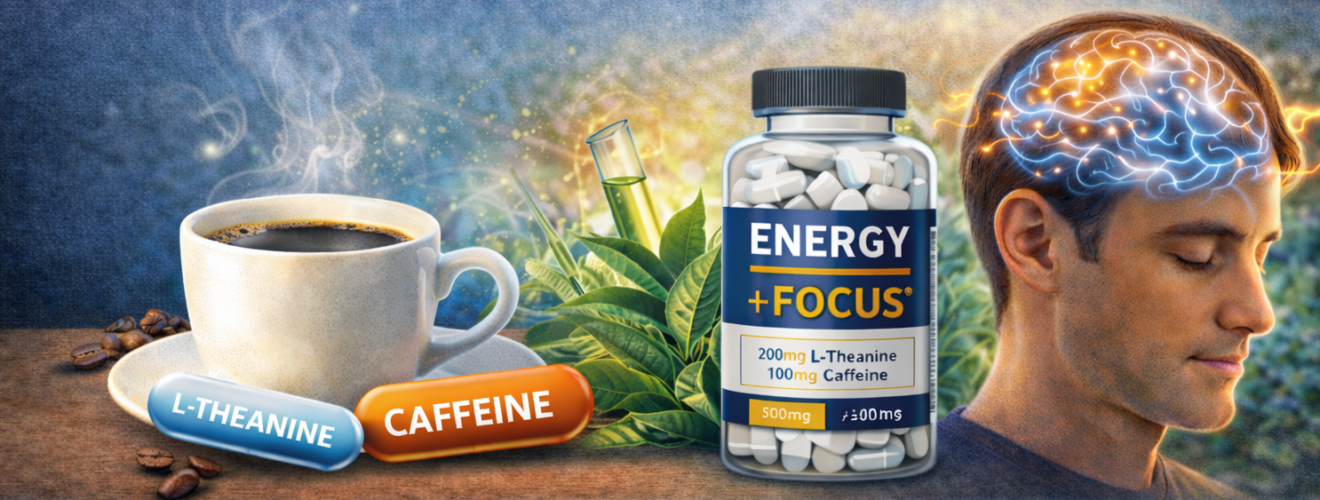
Walk into any health food store or browse Amazon and you’ll find dozens of caffeine + L-theanine supplements promising “smooth energy,” “calm focus,” and “clean alertness.” The appeal is obvious: who wouldn’t want caffeine’s mental sharpness without the jitters?
The theory makes sense. Caffeine boosts alertness and attention. L-theanine, an amino acid found naturally in tea, is supposed to smooth out the rough edges and create a sense of calm. Together, they should deliver focused energy without the downsides of caffeine alone. But does the science support this supplement combination, or just taking L-theanine with your coffee?
I analyzed the research and clinical trials to answer the question. The results were more positive than I expected. The combination works. Multiple randomized controlled trials confirm synergistic effects on attention and mood that neither compound achieves alone. L-theanine demonstrably buffers caffeine’s negative side effects like jitteriness and blood pressure spikes while preserving the cognitive benefits.
The catch? Every study is short-term, typically eight weeks or less. We have solid evidence for what this combination does in the hours after you take it, but no data on whether benefits persist with daily use for months or years.
What L-Theanine Actually Does
L-theanine is an amino acid discovered in 1949 by Japanese researchers studying green tea leaves. It’s almost exclusively found in tea plants (Camellia sinensis) and contributes to tea’s distinctive umami taste and calming effect. A typical cup contains 8-30mg of L-theanine, far less than the amounts used in research studies or available in supplements as discussed below.
What makes L-theanine interesting is how it affects the brain. The compound crosses the blood-brain barrier and reaches peak plasma concentration within about an hour of ingestion. Once there, it modulates several neurotransmitter systems, including glutamate (which excites neurons), GABA (which calms them), and dopamine (which affects motivation and reward). Research shows L-theanine increases alpha brain wave activity, a pattern associated with relaxed alertness rather than drowsiness or high stimulation. This is why people describe the L-theanine effect as “calm but focused” rather than sedated.
Interestingly, L-theanine’s structure closely resembles glutamate, the brain’s primary excitatory neurotransmitter. By occupying the same receptors that glutamate uses, L-theanine can dial down overactive brain signaling without shutting down normal brain function. Think of it as turning down the volume on an overly loud radio without muting it entirely. This may explain its anxiety-reducing effects without causing drowsiness.
Caffeine needs no introduction. It blocks adenosine receptors in the brain, preventing the accumulation of this sleep-promoting chemical. The result: increased alertness, improved reaction time, enhanced physical performance, and better sustained attention during demanding tasks. Caffeine is one of the most studied compounds in human nutrition, with decades of research confirming its effectiveness.
The hypothesis behind combining them is straightforward: caffeine provides the cognitive boost, L-theanine provides the calm. You get focused energy without anxiety or jitters.
Does L-Theanine Work on Its Own?
The evidence for L-theanine alone is modest. A 2025 systematic review and meta-analysis of randomized controlled trials examined L-theanine’s effects on cognition and mood. The conclusion was diplomatic but clear: results are “promising, but not completely conclusive.”
The strongest evidence for standalone L-theanine comes from people dealing with real-world stress. A 4-week randomized controlled trial in healthy adults experiencing stress-related symptoms discovered that 200mg daily L-theanine improved depression and anxiety scores, sleep quality, and verbal fluency compared to placebo. The key detail: adults dealing with typical life stressors like demanding jobs, difficult relationships, or overwhelming responsibilities, not people with clinical anxiety disorders.
Think about the parent managing three small children while working full-time, the student juggling multiple deadlines and exams, or the professional dealing with a difficult boss and constant pressure. These are the contexts where L-theanine shows clearer benefits. If you’re functioning well without elevated stress, L-theanine alone probably won’t deliver dramatic results.
For situations where you need quick cognitive enhancement, like before an exam or important presentation, L-theanine alone shows inconsistent results. Some studies show modest improvements in attention; others detect nothing. One comprehensive review stated that “the science does not yet match the hype” for L-theanine as a cognitive enhancer.
This matters because most L-theanine products market themselves as focus and cognitive enhancement supplements. The evidence better supports using L-theanine for stress management and as a buffer for caffeine’s side effects, not as a standalone cognitive booster.
Does the Combination Work Better?
This is where the evidence is compelling. Multiple independent randomized controlled trials demonstrate that combining L-theanine with caffeine produces cognitive effects neither compound achieves alone.
A 2014 meta-analysis (study of the studies) examined immediate/short-term effects of the caffeine-theanine combination on cognitive function and mood. The analysis revealed a moderate improvement in the ability to quickly switch from task to task, roughly equivalent to the difference between average performance and noticeably better-than-average performance. Choice reaction time also improved significantly, meaning people responded faster when they had to make quick decisions. The combination improved alertness and reduced mental fatigue during demanding cognitive tasks.
A 2025 study of 37 participants tested the combination in a particularly demanding scenario: young adults who hadn’t slept the night before. Participants received either placebo or high-dose combination (200mg L-theanine plus 160mg caffeine) after staying awake all night. The placebo group was impaired by sleep deprivation as expected. But the combination therapy group showed significantly improved attention, reaction time, and accuracy despite sleep loss—nearly four times the improvement versus placebo. There was a meaningful difference in tasks like driving, with significantly improved accuracy in detecting hazards and the ability to distinguish relevant from irrelevant information. Brain wave measurements showed improved attention, essentially allowing the sleep-deprived brain to function closer to its well-rested baseline.
The synergy appears dose-dependent. One study tested a low-dose combination (50mg L-theanine with 75mg caffeine) and discovered it actually eliminated caffeine’s beneficial cognitive and mood effects. Higher doses, typically 100-250mg L-theanine combined with 75-200mg caffeine, produce the clearest benefits.
Perhaps most interesting is that the combination doesn’t simply add L-theanine’s effects to caffeine’s effects; it creates a distinct experience. People consistently report feeling alert yet calm, focused without being jittery. This matches what the research shows: L-theanine preserves caffeine’s attention and alertness benefits while reducing its negative effects.
A 2010 study examined the combination’s effects on sustained attention and cognitive flexibility in healthy young adults. Forty-four participants received either placebo or a combination of 97mg L-theanine plus 40mg caffeine. Within 20-70 minutes of consumption, participants showed improved accuracy during task switching and increased alertness, while tiredness was reduced with a level of certainty of 99% and 95% respectively. The study confirmed that the combination helps focus attention during demanding cognitive tasks.
How L-Theanine Reduces Caffeine’s Downsides
One of L-theanine’s most valuable properties is its ability to reduce caffeine’s unwanted effects without blocking its benefits.
A study examining cardiovascular effects revealed that 200mg L-theanine counteracted caffeine’s blood pressure-elevating effects. Participants who took caffeine alone showed the expected increase in blood pressure during cognitive tasks, while those who took the combination maintained more stable blood pressure. Importantly, L-theanine didn’t reduce caffeine’s cognitive benefits; it selectively buffered the cardiovascular side effect.
Research on sleep quality showed that 50mg L-theanine reduced caffeine’s tendency to disrupt sleep. When people took L-theanine with their caffeine earlier in the day, they experienced less nighttime wakefulness compared to caffeine alone. This suggests L-theanine can reduce caffeine’s sleep-disrupting effects, though taking caffeine close to bedtime will still interfere with sleep regardless of L-theanine.
Multiple studies report that participants taking the combination experience less subjective jitteriness and anxiety compared to caffeine alone, while maintaining the same or better cognitive performance. This is valuable for caffeine-sensitive individuals who want the alertness boost without the physical discomfort.
When the Combination Caffeine & L-Theanine Works Best
- You experience jitteriness, anxiety, or elevated heart rate from coffee
- High-pressure situations, deadlines, exams, etc
- Must function despite poor or insufficient sleep
ZenobiaPeak Scores
Evidence-based summary for calm, focused energy
| Compound | Score | Notes |
| Caffeine + L-Theanine (Combination) Best “calm focus” signal | 94/100 | Validated effects with strong safety profile at typical doses; reliably reduces “jittery caffeine” for many people. |
| Caffeine (coffee / tea / capsules) Proven stimulant | 92/100 | Decades of evidence for alertness and performance; side effects depend heavily on dose and individual sensitivity. |
| L-Theanine (alone) Subtle, supportive | 45/100 | Modest benefits and good safety profile, but effects are typically mild without caffeine. |
Product Recommendations
Product Recommendations
For calm focus, the best-supported approach is 200mg L-theanine + 100–160mg caffeine, taken 30–60 minutes before a demanding task. If you avoid caffeine, L-theanine alone is a mild stress-buffer at 200–400mg/day.

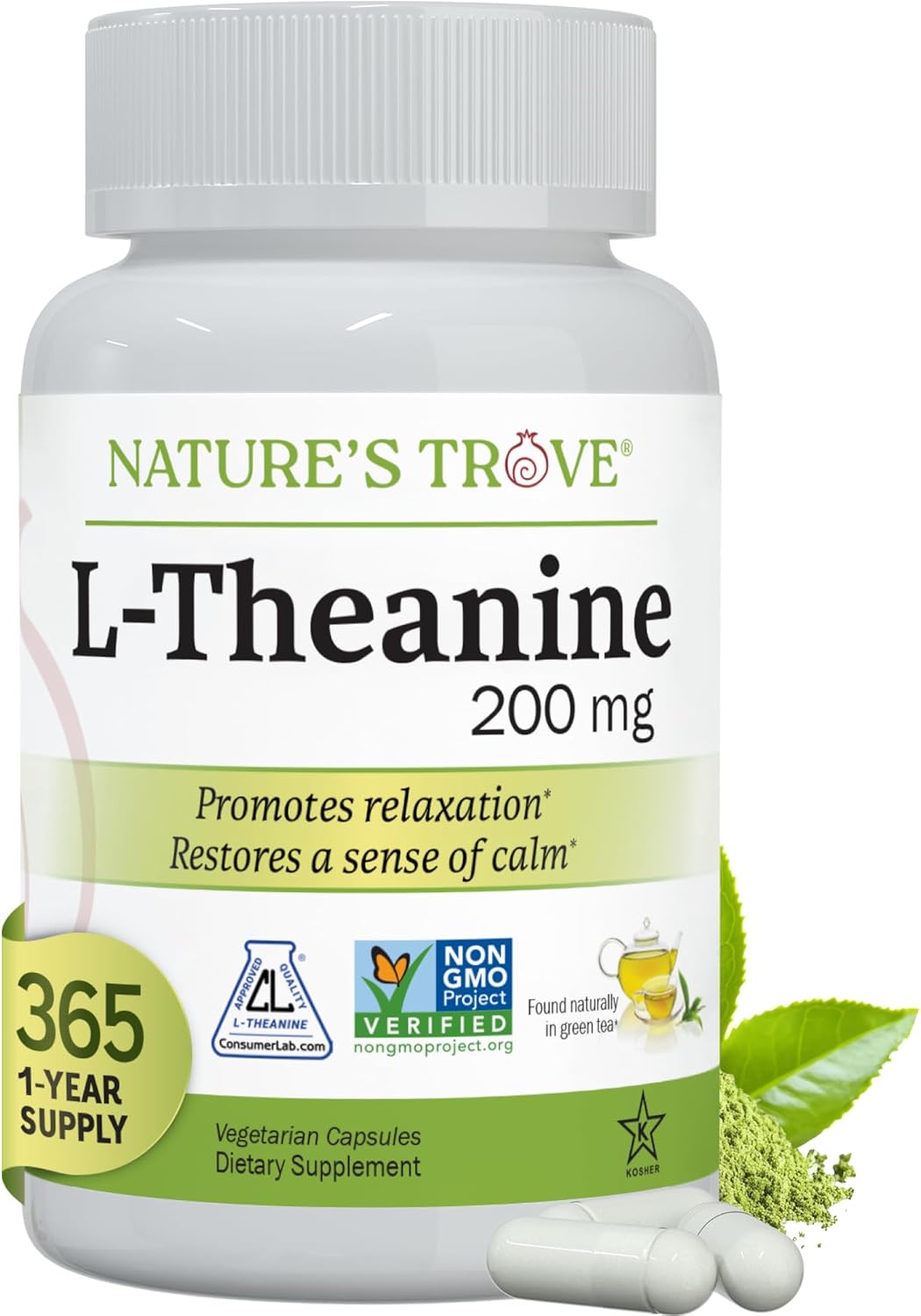

The caffeine and L-theanine combination delivers validated benefits: improved attention, faster reaction times, and better mood during cognitively demanding tasks. L-theanine demonstrably reduces caffeine’s negative side effects while preserving the cognitive benefits. The combination scores 94/100 because it objectively provides a better experience for many people, particularly those sensitive to caffeine’s stimulant effects. The honest caveat is that all evidence is short-term (eight weeks or less), so we don’t know if benefits persist with daily use for months or years. Whether you choose a combination supplement or add L-theanine to your existing coffee routine, both approaches are equally valid and supported by research.
References
- Payne ER, Aceves-Martins M, Dubost J, Greyling A, de Roos B. Effects of tea (Camellia sinensis) or its bioactive compounds L-theanine or L-theanine plus caffeine on cognition, sleep, and mood in healthy participants: a systematic review and meta-analysis of randomized controlled trials. Nutrition Reviews. 2025;83(10):1873–1891. https://academic.oup.com/nutritionreviews/article/83/10/1873/8123998
- Camfield DA, Stough C, Farrimond J, Scholey AB. Acute Effects of Tea Constituents L-Theanine, Caffeine, and Epigallocatechin Gallate on Cognitive Function and Mood: A Systematic Review and Meta-Analysis. Nutrition Reviews. 2014;72(8):507-22. https://doi.org/10.1111/nure.12120
- Nawarathna GS, Ariyasinghe DI, Dassanayake TL. High-Dose L-Theanine-Caffeine Combination Improves Neurobehavioural and Neurophysiological Measures of Selective Attention in Acutely Sleep-Deprived Young Adults: A Double-Blind, Placebo-Controlled Crossover Study. The British Journal of Nutrition. 2025;134(3):195-204. https://doi.org/10.1017/S0007114525104169
- Hidese S, Ogawa S, Ota M, et al. Effects of L-Theanine Administration on Stress-Related Symptoms and Cognitive Functions in Healthy Adults: A Randomized Controlled Trial. Nutrients. 2019;11(10):E2362. https://doi.org/10.3390/nu11102362
- Dodd FL, Kennedy DO, Riby LM, Haskell-Ramsay CF. A Double-Blind, Placebo-Controlled Study Evaluating the Effects of Caffeine and L-Theanine Both Alone and in Combination on Cerebral Blood Flow, Cognition and Mood. Psychopharmacology. 2015;232(14):2563-76. https://doi.org/10.1007/s00213-015-3895-0
- Mátyus RO, Szikora Z, Bodó D, et al. Promising, but Not Completely Conclusive—the Effect of L-Theanine on Cognitive Performance Based on the Systematic Review and Meta-Analysis of Randomized Placebo-Controlled Clinical Trials. Journal of Clinical Medicine. 2025;14(21):7710. https://www.mdpi.com/2077-0383/14/21/7710
- Dashwood R, Visioli F. L-Theanine: From Tea Leaf to Trending Supplement—Does the Science Match the Hype for Brain Health and Relaxation? Nutrition Research. 2025;134:39-48.https://doi.org/10.1016/j.nutres.2024.12.008
- Haskell CF, Kennedy DO, Milne AL, Wesnes KA, Scholey AB. The Effects of L-Theanine, Caffeine and Their Combination on Cognition and Mood. Biological Psychology. 2008;77(2):113-22. https://doi.org/10.1016/j.biopsycho.2007.09.008
- Kahathuduwa CN, Dassanayake TL, Amarakoon AMT, Weerasinghe VS. Acute Effects of Theanine, Caffeine and Theanine-Caffeine Combination on Attention. Nutritional Neuroscience. 2017;20(6):369-377. https://doi.org/10.1080/1028415X.2016.1144845
- Le J, Li L, Wang C, et al. The Function and Application Potential of L-Theanine: From Biotechnological Production, Biosynthesis, Bioactivity to Food Industry. Food Chemistry. 2025;492:145613. https://doi.org/10.1016/j.foodchem.2025.145613
- Bryan J. Psychological Effects of Dietary Components of Tea: Caffeine and L-Theanine. Nutrition Reviews. 2008;66(2):82-90. https://doi.org/10.1111/j.1753-4887.2007.00011.x
- Mancini E, Beglinger C, Drewe J, et al. Green Tea Effects on Cognition, Mood and Human Brain Function: A Systematic Review. Phytomedicine. 2017;34:26-37. https://doi.org/10.1016/j.phymed.2017.07.008
- Owen GN, Parnell H, De Bruin EA, Rycroft JA. The Combined Effects of L-Theanine and Caffeine on Cognitive Performance and Mood. Nutritional Neuroscience. 2008;11(4):193-8. https://pubmed.ncbi.nlm.nih.gov/18681988/
- Einöther SJ, Martens VE. Acute Effects of Tea Consumption on Attention and Mood. The American Journal of Clinical Nutrition. 2013;98(6 Suppl):1700S-1708S. https://doi.org/10.3945/ajcn.113.058248
- Williams JL, Everett JM, D’Cunha NM, et al. The Effects of Green Tea Amino Acid L-Theanine Consumption on the Ability to Manage Stress and Anxiety Levels: A Systematic Review. Plant Foods for Human Nutrition. 2020;75(1):12-23. https://pubmed.ncbi.nlm.nih.gov/31758301/
- Einöther SJ, Martens VE, Rycroft JA, De Bruin EA. L-Theanine and Caffeine Improve Task Switching but Not Intersensory Attention or Subjective Alertness. Appetite. 2010;54(2):406-9. https://doi.org/10.1016/j.appet.2010.01.003
- Giesbrecht T, Rycroft JA, Rowson MJ, De Bruin EA. The Combination of L-Theanine and Caffeine Improves Cognitive Performance and Increases Subjective Alertness. Nutritional Neuroscience. 2010;13(6):283-90. https://pubmed.ncbi.nlm.nih.gov/21040626/
- Rogers PJ, Smith JE, Heatherley SV, Pleydell-Pearce CW. Time for Tea: Mood, Blood Pressure and Cognitive Performance Effects of Caffeine and Theanine Administered Alone and Together. Psychopharmacology. 2008;195(4):569-77. https://pubmed.ncbi.nlm.nih.gov/17891480/
- Baba Y, Takihara T, Okamura N. Theanine Maintains Sleep Quality in Healthy Young Women by Suppressing the Increase in Caffeine-Induced Wakefulness After Sleep Onset. Food & Function. 2023;14(15):7109-7116. https://doi.org/10.1039/d3fo01247f
- Karunaratne UW, Dassanayake TL. Effect of L-Theanine on Selective Attention in a Traffic-Related Reaction Task in Sleep-Deprived Young Adults: A Double-Blind Placebo-Controlled, Crossover Study. Nutritional Neuroscience. 2025;28(4):471-480. https://pubmed.ncbi.nlm.nih.gov/39052627/