6 Supplements That Actually Lower Blood Pressure (Backed by Clinical Trials)
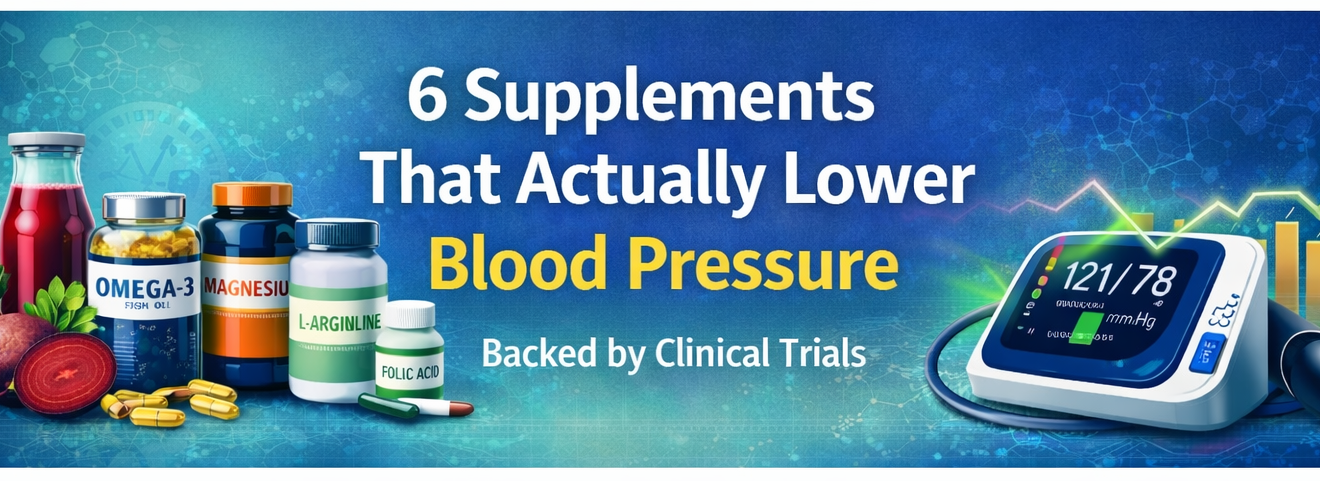
Discover 6 supplements that actually lower blood pressure, backed by science. Your blood pressure is creeping up. Maybe you’re already on medication but not quite hitting your target. Or maybe your doctor mentioned “lifestyle changes” before considering drugs. Either way, you’re wondering: beyond cutting salt and exercising more, is there anything else that actually works?
A comprehensive review in the Journal of the American College of Cardiology examined 25 different supplements to answer exactly this question. Researchers analyzed hundreds of clinical trials to find which ones genuinely lower blood pressure. The result? Only a handful of supplements reduced both the top number (systolic) and bottom number (diastolic). Most popular supplements—including vitamin C, vitamin D, vitamin E, and selenium—showed no effect whatsoever. [1]
Here are six that actually work, ranked by strength of evidence and practical usefulness.
The Numbers Are Staggering
Here’s a sobering reality: high blood pressure kills more people than any other preventable risk factor on the planet—over 10 million deaths annually worldwide. Nearly half of American adults have it, and 80-90% of us will develop it at some point in our lives. The damage happens silently over years: arteries stiffen, the heart muscle thickens from overwork, kidneys slowly fail, and tiny blood vessels in the brain accumulate damage that leads to dementia. You feel nothing until something breaks. But here’s the flip side: lowering blood pressure works. Every 10-point drop in systolic pressure reduces stroke risk by 27%, heart attack risk by 17%, and overall death risk by 13%. Small improvements add up to big protection.
Top 6 Supplements That Actually Lower Blood Pressure: Research-Backed Evidence
A Quick Blood Pressure Refresher
Blood pressure measures the force of blood against your artery walls. The top number (systolic) is pressure when your heart pumps; the bottom number (diastolic) is pressure when it rests. Normal is below 120/80. High blood pressure starts at 130/80. Every 10-point reduction in systolic pressure reduces heart attack and stroke risk by about 20%.
1. Beetroot Juice (Dietary Nitrate)
The evidence: A 2024 analysis of 11 trials found beetroot juice reduced systolic blood pressure by about 5 points (roughly 3-4%) in people with high blood pressure. [2] A landmark 4-week trial showed even more impressive results: 7.7 points off systolic and 5.2 points off diastolic pressure—comparable to some blood pressure medications. [3]
How it works: Beetroot is loaded with nitrates, which your body converts to nitric oxide—a molecule that tells blood vessels to relax and widen. But here’s the critical detail: this conversion requires bacteria on your tongue. When you drink beetroot juice, the nitrate contacts these bacteria, which convert it to nitrite. The nitrite then becomes nitric oxide in your body, relaxing blood vessels and lowering pressure. [4]
The dose: 250-500 mL of beetroot juice daily (providing 200-400 mg of nitrate). Effects appear within hours and persist with continued use. [3]
Important: Capsules won’t work the same way. Beetroot capsules bypass your mouth entirely, skipping the critical bacterial conversion step. One study found beetroot juice raised plasma nitrate/nitrite levels more effectively than equivalent doses of pure nitrate salt. [5] If you can’t tolerate the juice, try beetroot powder mixed into water or a smoothie—at least it contacts your mouth bacteria before swallowing. Or consider eating nitrate-rich vegetables like spinach and arugula, which showed blood pressure benefits in a 12-week trial. [6]
The catch: The taste isn’t for everyone (earthy, sweet), and it will turn your urine pink—harmless but surprising if you’re not expecting it. People using mouthwash heavily may see reduced benefits, as the bacteria that convert nitrate get killed off.
Who benefits most: People with high blood pressure who want a food-based approach. One study in Tanzania showed 24-hour blood pressure dropped by nearly 11 points after 60 days of beetroot juice—remarkable for a dietary intervention. [7]
|
Beetroot Juice
Score: 82/100
Expected BP change: 5–8 points (~4–5%)
Typical dose: 250–500 mL daily |
Recommended product
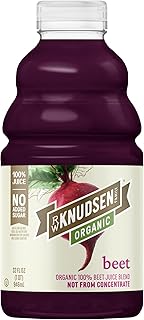
R.W. Knudsen Organic Beet Juice
Food-based nitrate source. Expect pink urine—harmless but surprising.
|
Be sure to check out our longer article, The Vegetable That Lowers Blood Pressure as Much as Some Medications, hint: Its’ beetroot!
2. Omega-3 Fatty Acids (Fish Oil)
The evidence: A 2022 analysis of 71 trials involving nearly 5,000 people found omega-3s reduced systolic blood pressure by about 2.6 points and diastolic by 1.8 points at optimal doses. [8] The American Heart Association acknowledges the blood pressure-lowering effects. [9]
How it works: Omega-3s (EPA and DHA from fish) improve blood vessel flexibility, reduce inflammation, and support nitric oxide production. They affect how your body processes sodium and help keep artery walls healthy and responsive. [10]
The dose: 2-3 grams daily of combined EPA and DHA. This is higher than most standard fish oil capsules provide—you’ll likely need 2-4 capsules of a concentrated formula. [8]
The catch: Lower doses (like the 1 gram used in some large trials) don’t show significant blood pressure effects. [11] You need the higher dose range. Fishy burps are the main complaint; taking with meals or using enteric-coated capsules helps.
Who benefits most: People with high blood pressure, high cholesterol, or older adults saw the strongest effects. The relationship is dose-dependent—more omega-3s in your blood means lower blood pressure. [8]
|
Omega-3 (Fish Oil)
Score: 78/100
Expected BP change: small but consistent in trials at adequate EPA+DHA doses
Practical note: higher-dose formulas can reduce pill burden |
Recommended product

Triple Strength DHA Omega 3 Fish Oil 3600 mg
Concentrated option to help reach research-relevant EPA+DHA dosing more easily.
|
3. Magnesium
The evidence: We covered this extensively in our companion article, “The Blood Pressure Supplement Backed by 38 Clinical Trials.” The short version: 38 randomized controlled trials show magnesium reduces blood pressure by 2-6% in people with hypertension, with the biggest effects (nearly 8 points systolic) in people already on blood pressure medication who aren’t at goal. [1]
How it works: Magnesium helps blood vessels relax by supporting nitric oxide production and acting as a natural counterbalance to calcium (which constricts blood vessels). When magnesium is low, blood vessels stay more constricted, raising pressure. [7]
The dose: 300-400 mg daily of elemental magnesium (citrate or glycinate forms absorb best).
The catch: Doesn’t work in people with normal blood pressure—which is actually a safety feature. May cause loose stools at higher doses.
Who benefits most: People on blood pressure medication who aren’t hitting targets, people with type 2 diabetes, and anyone taking medications that deplete magnesium (diuretics, proton pump inhibitors).
Already taking magnesium for migraines,? You’re covered. The doses overlap. For a more in-depth review, read our article, “Magnesium for Blood Pressure: What Dozens of Clinical Trials Actually Show”
|
Magnesium (Citrate)
Score: 78/100
Expected BP change: modest overall; stronger signal in deficient / higher-risk groups
Typical use: 300–400mg daily |
Recommended product

NOW Foods Magnesium Citrate 400mg
Well-absorbed form commonly used in supplementation research. Start lower if sensitive.
|
4. L-Arginine
The evidence: A 2022 analysis of 22 trials found L-arginine reduced systolic blood pressure by 6.4 points and diastolic by 2.6 points. [12] That’s a meaningful reduction—roughly 4-5% off the top number.
How it works: L-arginine is the direct raw material your body uses to make nitric oxide. It’s the substrate—the actual building block—that gets converted into the molecule that relaxes blood vessels. More arginine means more nitric oxide production capacity. [13]
The dose: 4-9 grams daily. The effective threshold appears to be at least 4 grams per day. [12] Interestingly, doses above 9 grams didn’t show additional benefit.
The catch: This is a lot of powder to take daily. High doses (above 9 grams as a single dose) can cause digestive upset—nausea, bloating, diarrhea. [14] Splitting the dose throughout the day helps. L-arginine worked in both people with normal and high blood pressure, and in both healthy and unhealthy populations. [12]
Who benefits most: Women may see slightly better results than men for diastolic pressure reduction. [12]
|
L-Arginine
Score: 74/100
Expected BP change: variable; dosing and tolerance matter
Practical note: GI side effects are the common limiting factor |
Recommended product
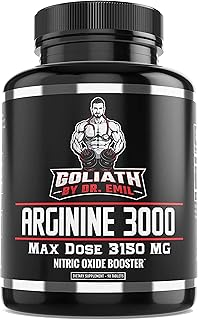
Dr. Emil – L Arginine 3150mg (3.150g)
Multi-gram daily dosing is common in trials, 4 to 9g
|
5. L-Citrulline
The evidence: The JACC review found L-citrulline reduced systolic pressure by about 3 points and diastolic by 3.4 points. [1] A separate analysis of 14 trials showed similar results, with stronger effects during physical activity or stress. [15]
How it works: L-citrulline is a clever workaround. It converts to L-arginine in your body, but it’s absorbed better and doesn’t get broken down in the liver the way arginine does. Think of it as a more efficient delivery system for the same end result: your body gets more L-arginine, which becomes more nitric oxide. [16]
The dose: 3-6 grams daily. [1]
The catch: The evidence is more mixed than for L-arginine. A 2018 analysis found no significant effect on blood pressure, though the authors noted body weight status affected results. [17] A 2024 review of trial designs noted significant inconsistency across studies. [18] L-citrulline appears to work better for blood pressure during exercise or stress than at rest. [16]
Who benefits most: People with prehypertension or hypertension. Doesn’t appear to lower blood pressure in people with normal readings. [16]
|
L-Citrulline
Score: 76/100
Expected BP change: similar “NO pathway” logic; evidence varies by population
Typical use: often 3–6g/day in trials |
Recommended product

Dorado L-Citrulline 3000mg (3g)
Typical research dosing is multi-gram daily. Often used as an “arginine booster.”
|
6. Folic Acid
The evidence: An analysis of 22 studies involving over 41,000 participants found folic acid reduced systolic blood pressure by about 1 point and diastolic by a small but significant amount. [19] The JACC review showed a 2.7-point reduction in systolic pressure. [1]
How it works: Folic acid supports the biochemical pathways that produce nitric oxide and protects blood vessels from damage. It reduces homocysteine, an amino acid that damages blood vessel walls when elevated. A 20-year study found people with the highest folate intake had 52% lower risk of developing high blood pressure. [20]
The dose: 0.4-5 mg daily. Higher doses (5+ mg) showed effects in shorter timeframes. [19]
The catch: The effect size is smaller than the other supplements on this list. Folic acid shines more for stroke prevention than blood pressure reduction—a major analysis showed it significantly reduces stroke risk, which may be its primary cardiovascular benefit. [21]
Who benefits most: People with cardiovascular disease, those with elevated homocysteine levels, and populations without folic acid food fortification (the US fortifies grain products, but many countries don’t).
|
Folic Acid
Score: 73/100
Expected BP change: modest; strongest signal in certain subgroups and longer use
Typical use: dosing varies widely across trials. |
Recommended product
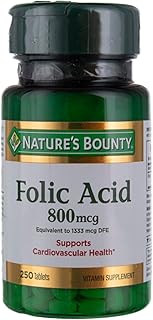
Nature’s Bounty Folic Acid
Straightforward, low-cost option. Use the dosing range you outline in your folate section.
|
A Potential Bonus for Men [and Women]
Since most of these supplements work by increasing nitric oxide—the same molecule that enables erections—there’s a logical connection to sexual function. And the research backs this up.
L-Arginine has the strongest evidence. A 2019 analysis of 10 randomized controlled trials found L-arginine supplements (1,500-5,000 mg daily) significantly improved erectile function compared to placebo, with men 3.4 times more likely to see improvement. [22] A 2022 trial gave men with blood flow-related erectile dysfunction 6 grams of L-arginine daily for 3 months. The results: 74% improved their erectile function category. [23] [24]
L-Citrulline showed promise in a smaller study. Men with mild erectile dysfunction took 1.5 grams daily for one month. Half of them improved from “mild ED” to “normal erectile function,” compared to only 8% on placebo. The number of intercourses per month nearly doubled!! [25]
Beetroot and Omega-3s haven’t been tested directly for erectile function in clinical trials, but the mechanism is the same—more nitric oxide means better blood flow everywhere, including where it matters for erections. [10]
The bottom line: if you’re taking these supplements for blood pressure and notice improved sexual function, that’s not a coincidence—it’s the same nitric oxide pathway at work.
The Honest Limitations
No cardiovascular outcomes data. We have strong evidence these supplements lower blood pressure numbers. We don’t have large trials proving they prevent heart attacks or strokes. The assumption is that lower blood pressure equals fewer cardiovascular events, but this hasn’t been proven specifically for supplements the way it has for medications.
Quality varies wildly. Supplement manufacturing isn’t regulated like pharmaceuticals. What’s on the label may not match what’s in the bottle. Stick with reputable brands that do third-party testing.
*ZenobiaPeak Scores reflect evidence quality, effect size, and practical usability for blood pressure reduction in adults with hypertension.
Practical Recommendations
If you want one supplement to try first: Beetroot juice has the strongest evidence specifically in people with high blood pressure, with effect sizes approaching some medications. It’s food-based, well-tolerated, and works quickly. Just remember: juice, not capsules.
If you’re already on blood pressure medication but not at goal: Magnesium (300-400 mg daily) showed the largest effects in this specific population—nearly 8 points off systolic pressure.
If you want cardiovascular benefits beyond blood pressure: Omega-3s have the broadest evidence base for heart health, including effects on triglycerides, heart rhythm, and inflammation.
If you prefer amino acid supplements: L-arginine has stronger evidence than L-citrulline, but requires higher doses that some people find inconvenient.
The Bottom Line
Six supplements have clinical trial evidence for lowering blood pressure: beetroot juice, omega-3 fatty acids, magnesium, L-arginine, L-citrulline, and folic acid. The strongest evidence supports beetroot juice (5-8 point reductions), omega-3s (2-3 points at adequate doses), and magnesium (2-8 points depending on population).
None of these replace blood pressure medications for people who need them. But for someone with borderline readings trying to avoid medication, or someone on medication who needs a little extra help reaching their target, these supplements offer legitimate, evidence-backed options at a fraction of the cost of pharmaceuticals.
The key insight from the research: most of these work through the same nitric oxide pathway. Pick one or two two that fits your lifestyle rather than stacking all six—you’re unlikely to get additive benefits, and you’ll definitely get additive costs.
You might also be interested in our recent article, “The $15 Cholesterol Fix Your Doctor Probably Hasn’t Mentioned.”
1 Response
[…] Looking for more non-prescription ways to reduce your blood pressure, check out our overview, “6 Supplements That Actually Lower Blood Pressure (Backed by Clinical Trials)“ […]